Showing posts with label book reviews. Show all posts

Sunday, 31 March 2013

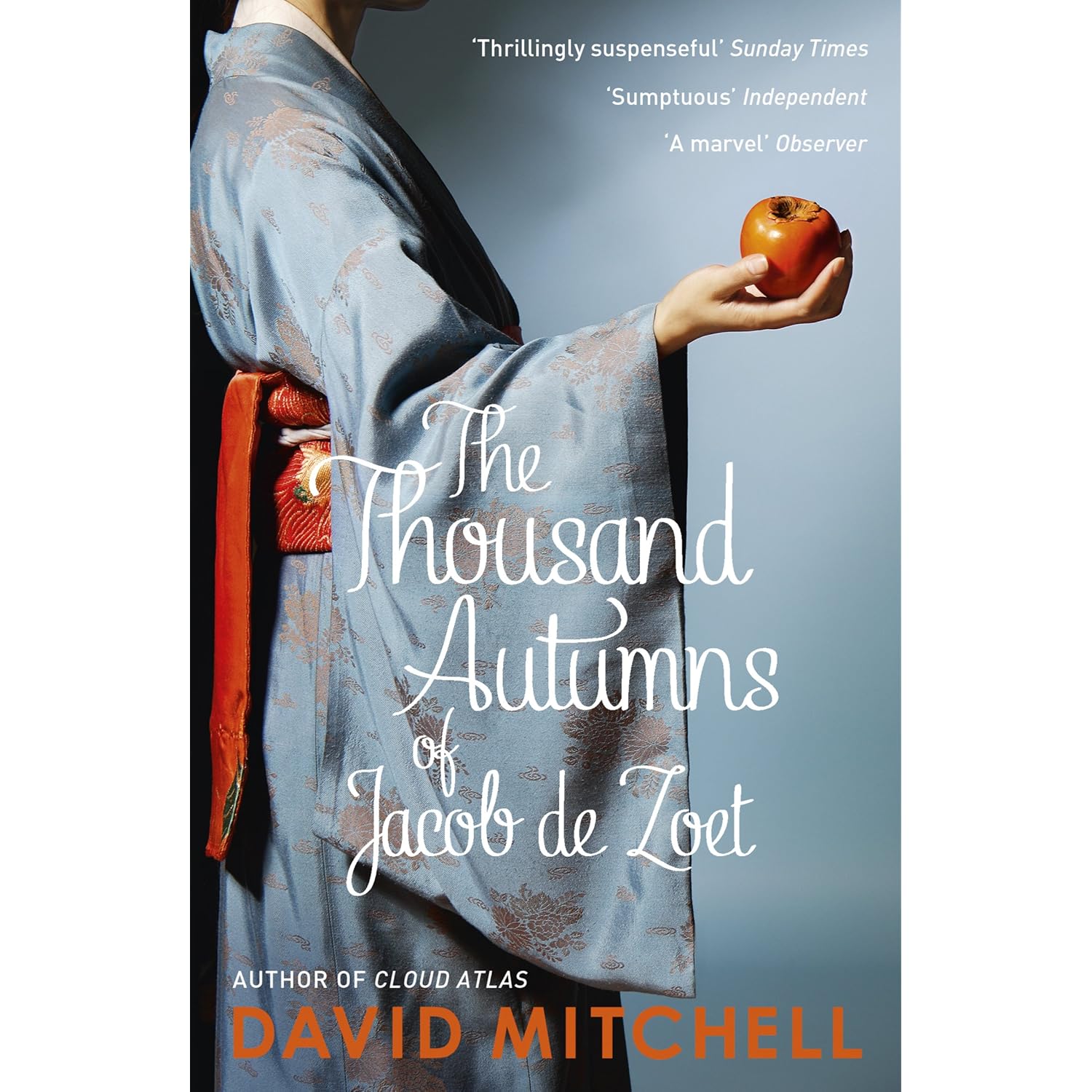
Book Review: The Thousand Autumns of Jacob De Zoet by David Mitchell

I picked this book up at Blackwells in Oxford last month when I was craving some more fiction in my life.  I have a bad habit of neglecting fiction because I feel guilty spending my time reading if I'm not contributing to some sort of knowledge growth for some reason.  Too much student-ing I guess.

But the front cover of The Thousand Autumns of Jacob de Zoet caught my eye as I'm interested in Japanese culture (I've studied Japanese since my teen years and have been to Japan a couple times), and I recognise David Mitchell's name but have never read The Cloud Atlas or any other of his books before.  I have to say I really enjoyed it, but my feelings about this book is about as complex as his list of characters!

The book takes place at the end of the 18th and beginning of the 19th centuries, on Dejima, a Dutch trading post on an artificial island off Nagasaki.  It follows a number of characters, namely Jacob de Zoet, a young pious Dutchman working with the trading company to prove and make a name for himself so that when he returns home he can be accepted by his love's family and win her hand.  However, on Dejima he falls in love with a young medical student, a Japanese midwife with a scarred face named Aibagawa Orito.

A map of Dejima, the 17th century artificial
island built by merchants
The story is rich and further in becomes truly epic, which I didn't at first expect.  What I was most suprised about was the sheer number of characters in the story.  It is written from the point of view of a number of them as the story transitions, as well.  I stuggled to keep track of who was who, and gave up a few times - there are character lists at the back, which indicates how truly numerous they are.

This story contained cultural elements from historical Japan, Holland, and Britain, and for that reason it added another dimension of 'cognitive skill' to get through as well.  The characters' language is rich with references to items and concepts that are foreign both in time and space, and it was sometimes a bit frustrating to read on knowing that you weren't completely understanding the richness the author obviously knew more about through his obviously extensive research.  Mitchell had lived in Japan when he was young, and very skillfully takes you to 18th century Japan, with sights, smells, images - but doesn't slow much to explain them all.  My Japanese was good enough to understand phrases used in the book, but I still felt a bit lost in certain circumstances when you just had to accept that there was some richer meaning that a 17th century Japanese, or Dutch, person would have understood much better.

My biggest criticism of the book is related to this - Mitchell introduces characters to the story at an alarming rate, and often all at once, whose names are difficult to pronounce and hard to remember.  While it makes for realistic and believable situations, the reader (or I, anyways) became frustrated at the lack of hand-holding to point to who was saying what.  Often speech was said and not marked - and when five or so new characters are talking, my brain just couldn't handle who was who - the frustration becoming heightened, when all of those characters in turn became important to the story in some way or another.
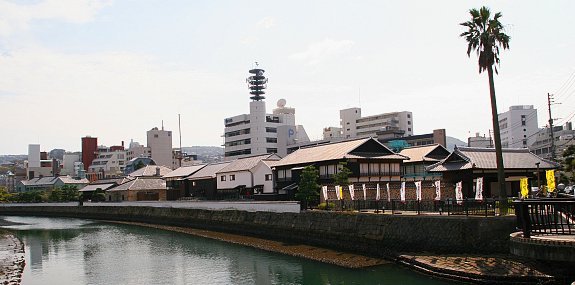
Dejima is a real, and you can visit it if you're ever
in the Nagasaki area!

But the plot was truly epic, and enjoyable.  The characters were dynamic and believable, and interesting.  The imagery was great as well, and Mitchell illustrated his story in my mind beautifully.  It was a long and complex book, but a fantastic ride.  And even though it was fiction, I was learning about 18th century botany, medicine, and international trade and politics at the same time!

I'd rate this book 4 out of 5 stars - thoroughly enjoyable but definitely not an 'easy read'!


Wednesday, 6 February 2013

Book Review: The Wild Life: A Year of Living on Wild Food by John Lewis-Stempel

The Wild Life: John Lewis-Stempel
John Lewis-Stempel was motivated at first to save money, but really because of his natural curiosity and appreciation of the landscape of Herefordshire, to try and live solely off the plants foraged and animals hunted on his 40-acre farm.  The Wild Life is his diary of that adventurous year, and it's hard to put down once started.

I really liked reading this book, and I connected with John's desire to have a greater relationship with the land he lived on.  Month by month, he goes through not only what he eats, but how he finds it and prepares it, and he really conveys the sense of how getting food becomes an all-consuming full time job for him.


The best thing about the book is the recipes he gives for different dishes he tries - dandilion coffee, making elderflower wine and other alcohols using the natural yeasts in the air, and endless recipes for spicing up rabbit dishes.  You sympathise with the boredom of rabbit as the go-to meal, even though rabbit to my husband and I is a tasty treat we only cook once in a while!

A possible feast awaits!
There were some strange illogicalities in the book, which I couldn't really fault, as they were more differences of ethical and moral opinion between John and I and not 'bad writing' in any way.  His wife noted that he shouldn't use the freezer, since that wouldn't be very 'natural'.  Yet he uses a gun to hunt the wildlife on his farm, and all the modern conveniences of his kitchen such as an oven, stove, grill, forged steel knives, and pickling jars.

Harking back to any 'olden' way of living off the land is near impossible anyway, since he is confined to his farm and bound by hunting regulations - so he cannot hunt a deer for example, and he cannot fish in the stream that belongs to his neighbour, and he cannot shoot ducks out of season (and endangered species are right off the list of course).  Taking the freezer out of the equation was just an unnecessary challenge I thought.


I miss knowing the names of all
 the birds I see
It seemed a bit arbitrary how he chose his rules to live by, such as when his daughter asked him to stop killing the cute bunnies, he acquiesces, but when he shoots to kill he seems to revel in a couple extra rounds to the head of an animal.  He doesn't fish for the lingest time, because he is scared of his failure.  We also find out that he has been feeding the carcasses of the animals he kills to his dog, and is not boiling the bones for stock or anything.  And he always needs an alcoholic drink in the evening, of something, anything (there are lots of recipes for alcohol)!  Just a few of the things that made me raise my eyebrows.

Salmon berries - I miss picking them!
I enjoyed this book, and it opened up a new area of reading possibilities for me, learning about Britian's wild food and living off the land (and hedgerows).  I'm unfortunately not in the best position to try that, living in residential urban Oxford, but it's the knowledge that I crave, growing up in rural Canada where I knew all the names of the plant and animal species that I lived with in my childhood, thanks to my dad's knowledge from being a logger (lumberjack to you Brits) that spent/spends most of his time in the bush.


I'd rate this book 4 stars out of 5 and recommend it to anyone that wants to learn more about having a meal gathered solely from the back yard.